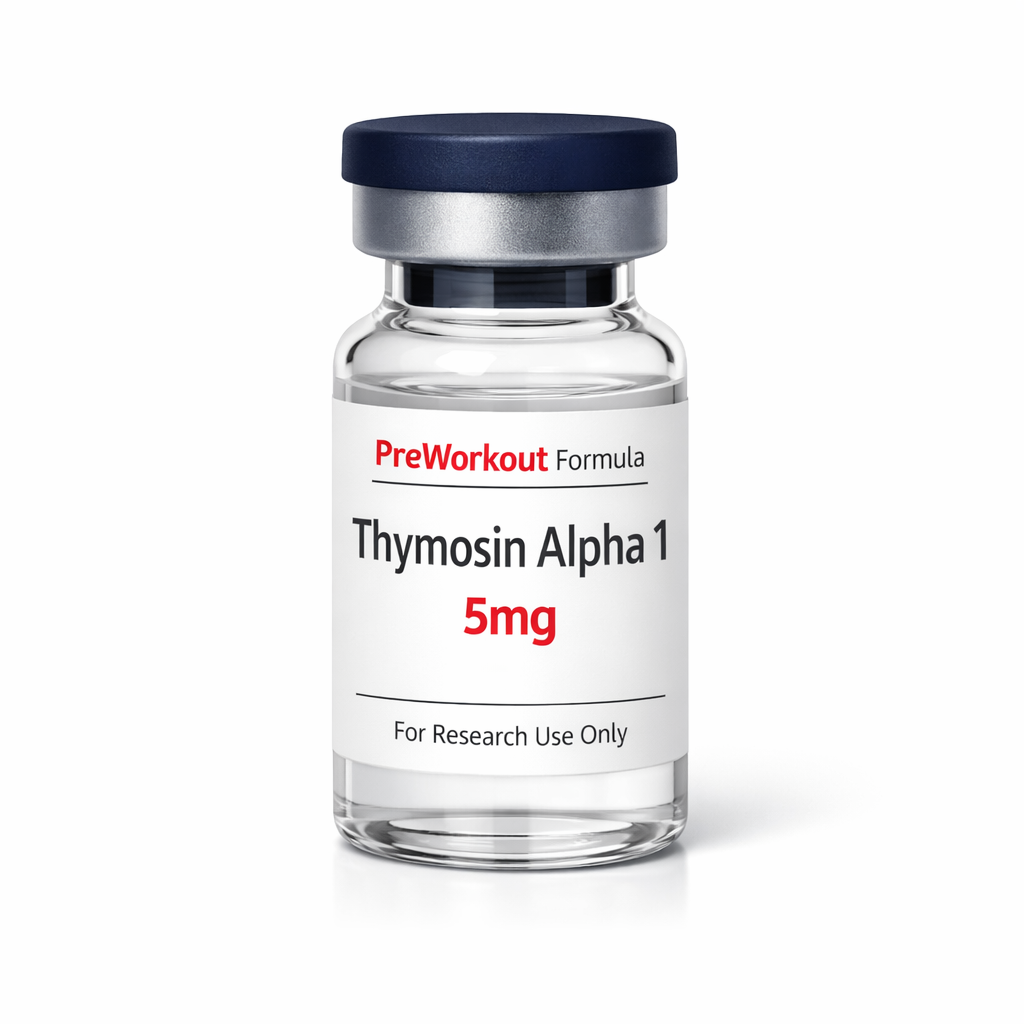
Thymosin Alpha 1
$59.99
Thymosin Alpha 1 (Ta1) — a 28-amino acid thymic peptide central to immune regulation research. FDA-orphan drug designated. 99%+ purity, HPLC verified. 5mg per vial. For research use only.
Description
Thymosin Alpha 1 — Immune Modulation Research Peptide
In 1977, Allan Goldstein’s laboratory at George Washington University isolated a 28-amino acid peptide from thymic tissue that would become one of the most clinically studied immune-modulating compounds in history. Thymosin alpha 1 (Ta1) has since appeared in over 4,400 published studies and holds FDA orphan drug designation — a rare distinction for a peptide of its size.
Ta1 is the lead compound from the thymosin fraction 5 family. It’s an acetylated, 28-residue peptide that acts as a biological response modifier — not a blunt immunostimulant, but a calibrator of immune function.
Molecular Profile
| Specification | Detail |
|---|---|
| Sequence | 28 amino acids (N-acetylated) |
| Molecular Weight | 3,108.3 Da |
| CAS Number | 62304-98-7 |
| Purity | ≥99% (HPLC) |
| Form | Lyophilized powder |
| Quantity | 5mg per vial |
| Storage | -20°C lyophilized; 2-8°C reconstituted |
Research Applications
Thymosin alpha 1 operates through Toll-like receptor (TLR) signaling — specifically TLR2 and TLR9. This triggers dendritic cell maturation and downstream activation of both innate and adaptive immune pathways. The mechanism is bidirectional: Ta1 upregulates suppressed immune responses while dampening overactive inflammatory cascades.
Major published research areas:
- Viral immune response — Garaci et al. (2012, International Immunopharmacology) reviewed Ta1’s role in modulating T-cell subsets and NK cell activity in chronic viral infection models
- Vaccine adjuvant research — Pica et al. (2004) demonstrated enhanced antibody titers and T-cell responses when Ta1 was co-administered with influenza vaccination in elderly models
- Dendritic cell biology — Romani et al. (2006, Blood) mapped Ta1’s activation of plasmacytoid dendritic cells through the TLR9/MyD88 pathway
- Immune reconstitution — Post-chemotherapy immune recovery models have shown accelerated T-cell repopulation with Ta1 administration
- Sepsis research — Li et al. (2009) published data on improved survival rates in sepsis models with Ta1 intervention targeting immune paralysis
Handling Notes
Reconstitute with sterile bacteriostatic water. The lyophilized form is stable during standard shipping conditions. Long-term storage at -20°C. Reconstituted solutions should be kept at 2-8°C and used within 14 days.
Quality Assurance
Full third-party analytical panel: HPLC for purity, mass spectrometry for identity confirmation, endotoxin testing. Documentation available per lot number.
Related Products
Immune regulation and peptide signaling researchers frequently work with these compounds:
- Selank — tuftsin-derived peptide with immune and anxiolytic research applications
- Epithalon — telomerase and aging pathway research
- Sermorelin — GH-axis signaling and endocrine studies
- Semax — ACTH(4-10) analog for neurotrophic research
Frequently Asked Questions
What is thymosin alpha 1 used for in research?
Ta1 is studied for immune modulation — specifically its effects on dendritic cell maturation, T-cell differentiation, and NK cell activation through Toll-like receptor signaling. Research spans viral immunology, vaccine enhancement, sepsis models, and post-immunosuppression recovery.
Does thymosin alpha 1 have FDA designation?
Yes. Ta1 holds FDA orphan drug designation. It’s also approved as a pharmaceutical product in over 35 countries under the brand name Zadaxin, primarily for hepatitis research applications.
How does thymosin alpha 1 differ from thymosin beta 4?
Different peptides entirely. Ta1 is a 28-amino acid immune modulator acting on TLR2/TLR9 pathways. Thymosin beta 4 (Tb4) is a 43-amino acid peptide involved in actin sequestration, wound repair, and tissue remodeling. Different sequences, different receptors, different research applications.
What is the purity of this thymosin alpha 1?
≥99% by HPLC. Every batch undergoes third-party analytical testing with certificates of analysis available on request.
What TLR pathways does thymosin alpha 1 activate?
Published research identifies TLR2 and TLR9 as primary targets. Downstream signaling involves MyD88-dependent pathways leading to NF-kB activation and type I interferon production through IRF7 induction in dendritic cells.
How should thymosin alpha 1 be stored?
Lyophilized: -20°C for long-term storage. Reconstituted: 2-8°C, use within 14 days. The peptide is stable at room temperature during transit.
How many studies have been published on thymosin alpha 1?
Over 4,400 published papers as of 2024, making it one of the most extensively studied thymic peptides. Research spans from Goldstein’s original 1977 isolation through current immune modulation studies.
Where can I buy thymosin alpha 1 for research?
PreWorkout Formula supplies research-grade thymosin alpha 1 at 99%+ purity with HPLC verification and fast shipping. Sold exclusively for legitimate research use.
This product is intended for laboratory and research use only. Not for human consumption. By purchasing, you agree to use this product solely for legitimate research purposes.