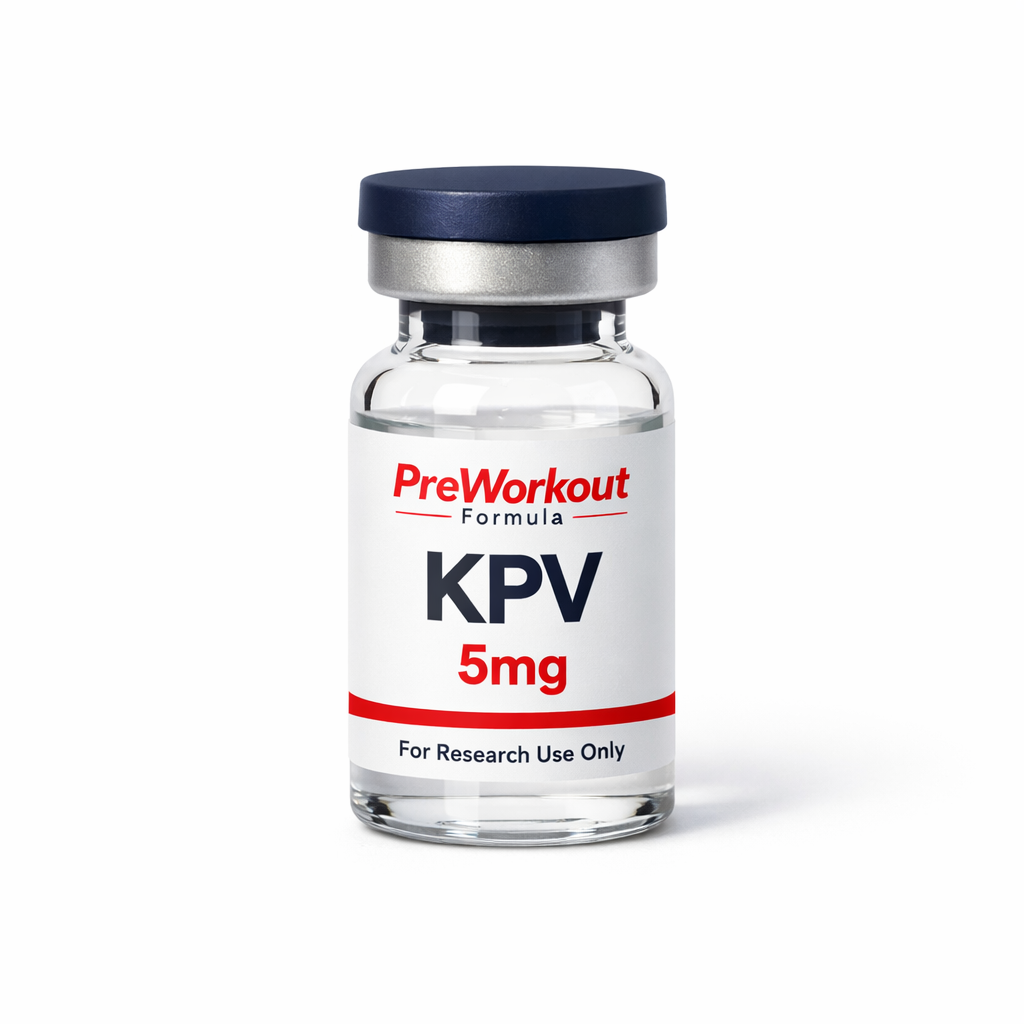
KPV
$44.99
C-terminal tripeptide fragment of alpha-MSH (Lys-Pro-Val). 5mg lyophilized powder, ≥99% HPLC-verified purity. Studied for NF-κB suppression, intestinal inflammation modulation, and oral bioavailability via PepT1 transport. COA included.
Description
KPV: The Three-Amino-Acid Anti-Inflammatory Peptide From Alpha-MSH
Three amino acids. Lysine-Proline-Valine. That’s the entire structure of KPV — yet this C-terminal tripeptide fragment of alpha-melanocyte-stimulating hormone (α-MSH) has generated a disproportionate volume of published anti-inflammatory research relative to its size. First characterized by Brzoska et al. in FEBS Letters (1999), KPV retained the anti-inflammatory potency of the full 13-amino-acid α-MSH molecule while eliminating the melanogenic (skin-darkening) activity entirely.
That dissociation between anti-inflammatory and melanogenic effects was the breakthrough. Full-length α-MSH activates MC1R receptors on melanocytes, triggering melanin production — an unwanted variable in inflammation research. KPV bypasses MC1R entirely while preserving NF-κB suppression through a distinct intracellular mechanism documented across multiple peer-reviewed publications.
Peptide Specifications
| Parameter | Detail |
|---|---|
| Sequence | Lys-Pro-Val (C-terminal fragment of α-MSH) |
| Molecular Weight | 342.43 g/mol |
| Purity | ≥99% (HPLC verified) |
| Form | Lyophilized powder |
| Quantity | 5mg per vial |
| Storage | -20°C prior to reconstitution |
| Parent Compound | α-MSH (alpha-melanocyte-stimulating hormone) |
Mechanisms Documented in Published Research
NF-κB Pathway Suppression: The primary documented mechanism. KPV enters cells and directly interacts with the NF-κB signaling cascade — the master regulator of inflammatory gene expression. Kannengiesser et al. published data in Journal of Immunology (2008) showing KPV inhibited NF-κB nuclear translocation in colonocyte cell lines, reducing downstream production of TNF-α, IL-6, and IL-8.
Intestinal Inflammation Models: This is where KPV research has concentrated most heavily. Dalmasso et al. (PLoS ONE, 2008) demonstrated that KPV reduced colonic inflammation in a DSS-induced colitis mouse model. The peptide was effective via both systemic and — notably — oral administration routes. Intestinal epithelial cells showed direct KPV uptake through PepT1 transporter-mediated absorption.
Microbiome Interaction Research: An emerging frontier. Preliminary studies suggest KPV may influence gut microbial composition indirectly through its anti-inflammatory effects on the intestinal epithelial barrier. Reduced barrier permeability alters the luminal environment — a mechanism being explored in dysbiosis research models.
Dermatological Inflammation: Separate from its GI applications, KPV has been studied in skin inflammation models. Mastrofrancesco et al. (Peptides, 2015) published findings on KPV’s ability to suppress inflammatory cytokine release from keratinocytes stimulated with TNF-α. The lack of melanogenic activity makes it suitable for dermal inflammation studies without confounding pigmentation variables.
Why KPV Stands Out in Peptide Research
Size matters — in reverse. At just 342 Da, KPV is small enough for PepT1 transporter-mediated cellular uptake. Most bioactive peptides require receptor-mediated signaling from outside the cell. KPV gets inside. This intracellular access explains why it suppresses NF-κB so effectively — it reaches the signaling complex directly rather than working through membrane receptor cascades.
The oral bioavailability data is equally notable. A tripeptide surviving GI transit intact is uncommon but documented. PepT1 transporters in intestinal epithelial cells actively import KPV — making oral administration research protocols feasible without degradation concerns.
Handling & Reconstitution
Dissolve in bacteriostatic water at 1mL per 5mg vial. KPV’s small size means rapid dissolution — typically under 60 seconds with gentle swirling. Store at 2-8°C once reconstituted, stable for approximately 28 days. The low molecular weight makes KPV more resilient to freeze-thaw cycles than larger peptides, though minimizing cycles is still recommended practice.
Frequently Asked Questions
What is the relationship between KPV and alpha-MSH?
KPV consists of the three C-terminal amino acids (positions 11-13) of the 13-amino-acid alpha-MSH hormone. Research by Brzoska et al. demonstrated this fragment retains the anti-inflammatory activity of the full hormone while lacking the melanocyte-stimulating (skin-darkening) properties mediated by MC1R receptor binding.
How does KPV suppress inflammation without receptor binding?
KPV enters cells via PepT1 transporters and directly inhibits NF-κB nuclear translocation — an intracellular mechanism. This is fundamentally different from receptor-mediated anti-inflammatory compounds. Once inside the cell, KPV interferes with the signaling cascade that activates inflammatory gene transcription.
Has KPV been studied for oral delivery?
Yes. Dalmasso et al. (2008) demonstrated effective oral administration in colitis models. PepT1 transporters in intestinal epithelial cells actively absorb the tripeptide. This oral bioavailability is unusual for peptides and represents one of KPV’s most distinctive research properties.
What inflammatory markers does KPV reduce in published studies?
TNF-α, IL-6, IL-8, and IL-1β have all been documented as downregulated in KPV-treated cell and animal models. The suppression occurs at the transcriptional level through NF-κB inhibition rather than through direct cytokine neutralization.
Is KPV studied alongside other anti-inflammatory peptides?
Yes. BPC-157 is the most common co-investigational peptide — particularly in GI inflammation protocols. BPC-157 works through NO system modulation while KPV targets NF-κB, making them mechanistically complementary. LL-37 is also studied alongside KPV in antimicrobial-inflammatory crossover research.
Why is KPV relevant to gut barrier research?
Intestinal barrier integrity is maintained partly by epithelial tight junction proteins. Inflammatory signaling via NF-κB degrades these junctions, increasing permeability. KPV’s suppression of NF-κB in colonocytes has been shown to preserve tight junction protein expression — directly relevant to intestinal permeability research models.
What makes KPV different from other NF-κB inhibitors?
Most NF-κB inhibitors are large molecules requiring receptor-mediated delivery. KPV at 342 Da enters cells through peptide transporters, bypassing membrane receptor requirements entirely. This direct intracellular access, combined with oral bioavailability and zero melanogenic activity, creates a unique research profile.
Related Products
- BPC-157 — Complementary GI research peptide operating through NO system modulation
- LL-37 — Antimicrobial peptide with documented anti-inflammatory crossover activity
- TB-500 — Anti-inflammatory and tissue repair peptide with distinct actin-based mechanism
- Selank — Immunomodulatory peptide with overlapping cytokine research applications
This product is intended for laboratory and research use only. Not for human consumption. All buyers must be qualified researchers or institutions. By purchasing, you agree to use this product solely for legitimate research purposes.