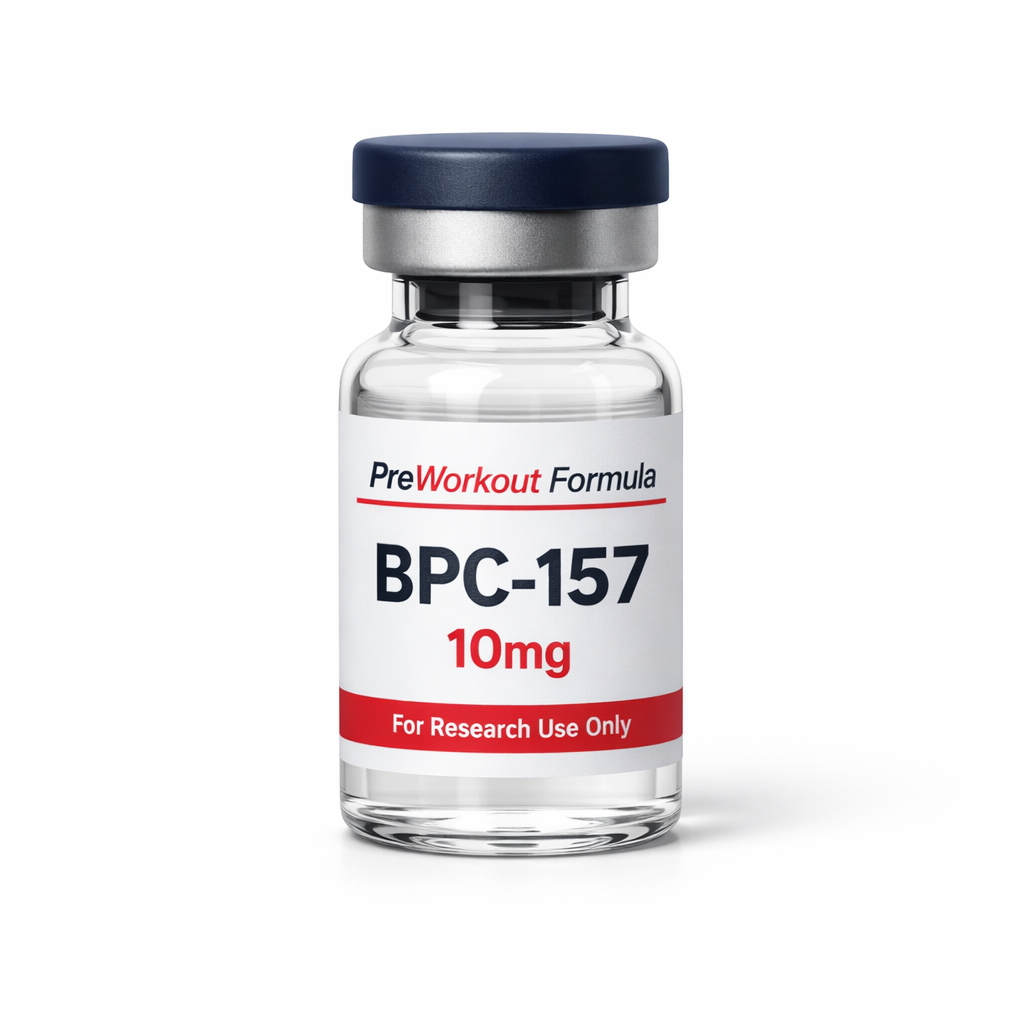
BPC-157
$59.00
Synthetic pentadecapeptide (15 amino acids) from human gastric juice. 5mg lyophilized powder, ≥99% HPLC-verified purity. Extensively studied for tissue repair, GI protection, and nitric oxide system modulation. Certificate of analysis included.
Description
BPC-157: The Body Protection Compound Reshaping Tissue Repair Research
A 15-amino-acid peptide fragment derived from human gastric juice — that’s BPC-157 in its simplest form. First isolated and characterized by researchers at the University of Zagreb in the early 1990s, this synthetic pentadecapeptide has since generated over 100 published studies across gastroenterology, orthopedic medicine, and neuroscience journals.
What separates BPC-157 from most peptides in current research pipelines? Stability. Unlike many bioactive peptides that degrade rapidly in acidic environments, BPC-157 remains structurally intact in gastric fluid — a property that’s driven substantial interest in oral bioavailability studies (Sikiric et al., Journal of Physiology Paris, 1999).
Peptide Specifications
| Parameter | Detail |
|---|---|
| Sequence | Gly-Glu-Pro-Pro-Pro-Gly-Lys-Pro-Ala-Asp-Asp-Ala-Gly-Leu-Val |
| Molecular Weight | 1419.53 g/mol |
| Purity | ≥99% (HPLC verified) |
| Form | Lyophilized powder |
| Quantity | 5mg per vial |
| Storage | -20°C prior to reconstitution |
| CAS Number | 137525-51-0 |
Published Research Areas
The bulk of BPC-157 literature falls into three categories — and the findings across all three are remarkably consistent.
Gastrointestinal Tissue Recovery: Multiple rat model studies demonstrated accelerated healing of esophageal, gastric, and intestinal lesions. A 2010 study in Life Sciences showed significant reduction in inflammatory bowel disease markers at doses as low as 10 μg/kg. The peptide’s origin in gastric juice makes this research track particularly logical.
Musculoskeletal Repair Mechanisms: Tendon-to-bone healing, muscle crush injuries, ligament transection — BPC-157 has been evaluated across a range of connective tissue injury models. Chang et al. (2011, Journal of Applied Physiology) reported enhanced tendon fibroblast migration and accelerated collagen organization in treated groups versus controls.
Nitric Oxide System Interactions: Perhaps the most mechanistically interesting line of research. BPC-157 appears to modulate the NO system in ways that influence blood vessel formation. Sikiric et al. published findings in Current Pharmaceutical Design (2014) showing the peptide counteracted both NO-synthase inhibitor and NO-releasing agent effects — suggesting a regulatory rather than purely stimulatory role.
Why Researchers Choose BPC-157
Three practical advantages keep this peptide at the top of research procurement lists. First, its gastric stability eliminates a major variable in oral administration studies. Second, no lethal dose (LD1) has been established in toxicology screenings — an unusual safety profile for a bioactive peptide. Third, the existing literature base is substantial enough to design well-informed protocols without starting from scratch.
Every vial ships with a certificate of analysis confirming ≥99% purity via HPLC, plus mass spectrometry verification of molecular identity.
Reconstitution & Handling
Reconstitute with bacteriostatic water. Standard practice: 1-2mL per 5mg vial. Store reconstituted solution at 2-8°C and use within 30 days. Avoid repeated freeze-thaw cycles — peptide integrity degrades measurably after the third cycle (documented via HPLC stability testing).
Frequently Asked Questions
What is BPC-157 derived from?
BPC-157 is a synthetic 15-amino-acid fragment of a larger protein called Body Protection Compound, which occurs naturally in human gastric juice. The synthetic version replicates the bioactive segment responsible for the observed protective effects in published studies.
What purity standard does this BPC-157 meet?
Every batch is HPLC tested to confirm ≥99% purity. Certificates of analysis are available and ship with each order, including mass spectrometry data verifying the correct molecular weight of 1419.53 g/mol.
How should BPC-157 be stored before reconstitution?
Store lyophilized BPC-157 at -20°C in a dry environment. Under these conditions, the peptide maintains stability for 24+ months. Once reconstituted with bacteriostatic water, refrigerate at 2-8°C and use within 30 days.
Has BPC-157 shown toxicity in published research?
No lethal dose has been identified in any published toxicology study to date. Sikiric et al. noted this absence of toxicity across multiple dosing ranges in their comprehensive review published in Current Pharmaceutical Design (2014).
What makes BPC-157 different from other healing peptides like TB-500?
The key differentiator is gastric stability. Most bioactive peptides break down in stomach acid, but BPC-157 — derived from gastric juice itself — remains intact. TB-500 operates through different mechanisms (thymosin beta-4 pathways) and the two are often studied in complementary research protocols.
Can BPC-157 be used in oral administration research?
Yes. Its stability in gastric fluid is one of the most distinctive properties documented in the literature. Multiple studies have used oral administration routes successfully, which is unusual for peptide-based research compounds.
What is the standard reconstitution protocol?
Add 1-2mL of bacteriostatic water to the 5mg vial. Inject the water slowly against the vial wall — do not spray directly onto the lyophilized cake. Swirl gently until dissolved. Do not shake or vortex aggressively.
How does BPC-157 interact with the nitric oxide system?
Research indicates BPC-157 functions as a modulator rather than a simple stimulator of the NO system. It has shown the ability to counteract both NO-synthase blockers and NO-releasing agents, suggesting a balancing or regulatory mechanism — an area of active investigation.
Related Products
- TB-500 — Frequently paired with BPC-157 in tissue repair research protocols
- GHK-Cu — Copper peptide studied for wound healing and tissue remodeling
- LL-37 — Antimicrobial peptide with overlapping tissue recovery research applications
- KPV — Anti-inflammatory tripeptide studied alongside BPC-157 in gut research
This product is intended for laboratory and research use only. Not for human consumption. All buyers must be qualified researchers or institutions. By purchasing, you agree to use this product solely for legitimate research purposes.